Tribal groups, in which all men and women on Earth have lived since humanity emerged, have functioned through cooperation and solidarity among their members in tasks such as obtaining and distributing food, building shelters, and family dwellings or taking care of community assets; tasks that today we would call ‘economic’. In fact, over hundreds of thousands of years of human presence on Earth the whole economy was cooperative and supportive. And at the time it was sustainable. About 6,000 years ago things began to change, when the first sophisticated civilizations arose and put into practice a variety of new forms of economic organization; from the range of traditional systems based on agriculture or trade to, subsequently, feudalism, mercantilism and everything else after that. Today, however, all the economic diversity that existed over those 6,000 years is virtually nullified, and an (almost) unique model has once again consolidated. It is called capitalism, and it has been going on for about 200 years.
Ancestral economies were based on solidarity and cooperation among people, on a harmony between them and nature and on an orientation towards the mere satisfaction of their needs. Capitalism is characterized by competition among peers, by the predation of the Earth and by an orientation of its agents aiming at unlimited material accumulation. Both modes are hegemonic, each in its own time, but that is about as much as these modes have in common.
Can, like its ancestral homologous form, the present ‘state of the art’ in economic organization – capitalism – last for hundreds of thousands of years? It does not seem possible, given the condition in which it left the planet and humans, after only 200 years. Earth’s soils, rivers, oceans, and atmosphere are now filled with the poisons left over from our economic activity; the climate is changing, the elements unsettled and life as we know it may be doomed, if we do not make deep and rapid changes. As for us humans, materialistic as we have become, we too often forget who we really are and can do: our nature as creators; our ability to generate art, mathematics or philosophy; our potential for freedom, for choosing paths, for changing ourselves and the world as we decide, and the lack of any natural bound between us and what we can achieve or be. By forgetting so much, we reduce ourselves to economic roles, going now so far as to even discuss whether artificial intelligence and robots will make us pointless and expendable one day. The culprit is our current economic culture and system.
However, despite its pitfalls, an important merit can be attributed to capitalism: with the demand for accumulation and profit, it has given us machinery, techniques, and knowledge that can now allow us to access the resources necessary for the material comfort of all. This is only a possibility though, since these machines, techniques, and knowledge only provide the capacity, not the guarantee of its use.
Our collective future is unforeseeable. It will be the result of an infinity of both conscious choices and involuntary actions, taken by billions of individuals and groups, in a chaotic general movement that no one can control or anticipate. And yet, it can be felt that capitalism would make no sense in human history unless it was fated to eventually free us from the shackles of material scarcity. Hence, and in this way only, can it eventually be seen as a process to elevate humanity onto a superior civilizational level, as a means to true progress. The great economic question of our time must therefore be: how to accomplish the potential that capitalism offers us? The simple ‘progress’, as currently evolving, does not seem to be the way. Reality shows us, everywhere, that the mere growth of the present economy, without any change or innovation in its logic and processes, will never free us. Neither will the strengthening of the so-called welfare state, in its traditional, bureaucratic, expensive and life-controlling form. It can do no more than mitigate poverty, but at a high cost in dignity to its beneficiaries, and a cost in humanity to all the others. The more unnecessary this becomes the more intolerable it gets.
Each one of us, rich or poor, directly or indirectly is suffering from the lack of a process which guarantees the essentials for all. Clearly, this is no longer a problem of production capacity, but one of economic organization. The satisfaction of the basic needs of all people is not inherent to capitalism, nor has it ever been added to it. However, without such process, we will not rid ourselves from the specter of material scarcity, and therefore from this never-enough culture in which we find ourselves in. Mainly reduced to producers and consumers, competitors and judges of each other’s merits, we are exhausting the energy that could alternatively be spent in higher occupations which our potential allows and claims for us.
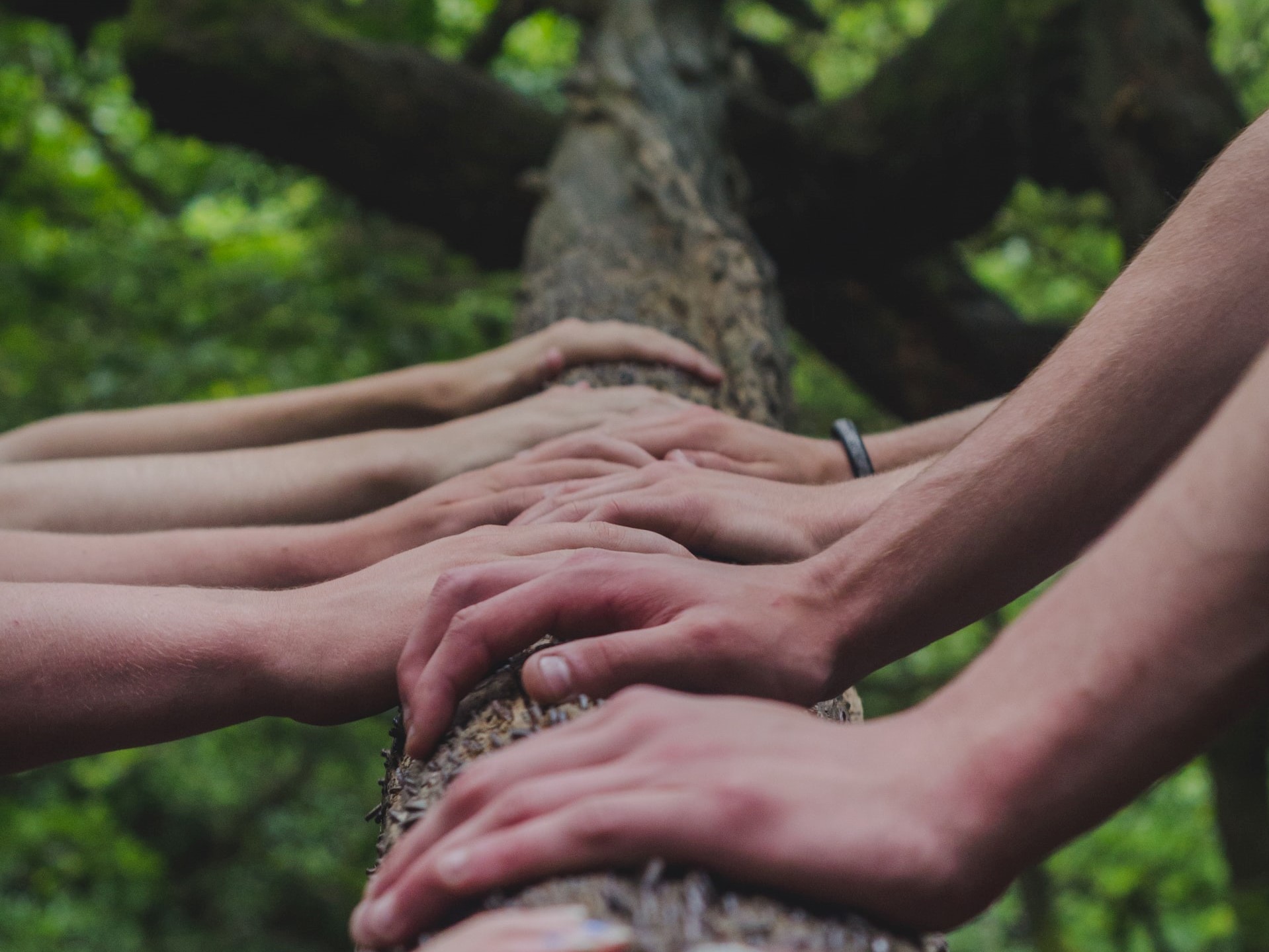
And yet, we can immediately introduce such process of guaranteeing the essentials for all: let us recover from our ancestral economic way its core element of solidarity among people.
Translated to English by André Coelho.